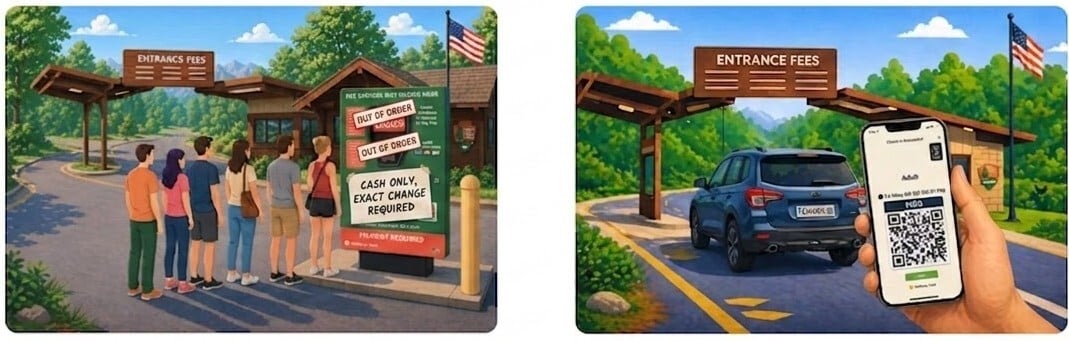


Unmanned parks have long been one of the most difficult areas for agencies to manage effectively. For decades, the standard approach has relied on iron rangers, kiosks, and manual collection methods—systems built on the assumption that visitors will stop, pay, and comply.
In practice, that assumption rarely holds. Across the country, compliance rates at unmanned locations often fall below 50%. Equipment breaks down, cash handling introduces inconsistencies, and staff are left without clear visibility into actual usage or revenue performance. Over time, this creates a persistent gap between what parks should be collecting and what they actually bring in.
As agencies face increasing pressure to do more with limited resources, many are beginning to reevaluate whether this traditional model is still sustainable.
The Problem Isn’t the Visitor—It’s the System
It is easy to assume that low compliance is the result of visitor behavior. However, in most cases, the issue lies with the system itself.
Outdated payment methods introduce friction at the point of entry. Visitors are often met with unclear instructions, limited payment options, or equipment that is out of service. In an environment where convenience is expected, these barriers significantly reduce the likelihood of payment.
When the process is difficult, compliance declines. When it is simple and intuitive, compliance improves.
This distinction is critical. The opportunity is not to enforce more aggressively, but to make it easier for visitors to do the right thing.
From Passive Collection to Active Revenue Control
Modern approaches to unmanned park entry shift the model from passive collection to active revenue control.
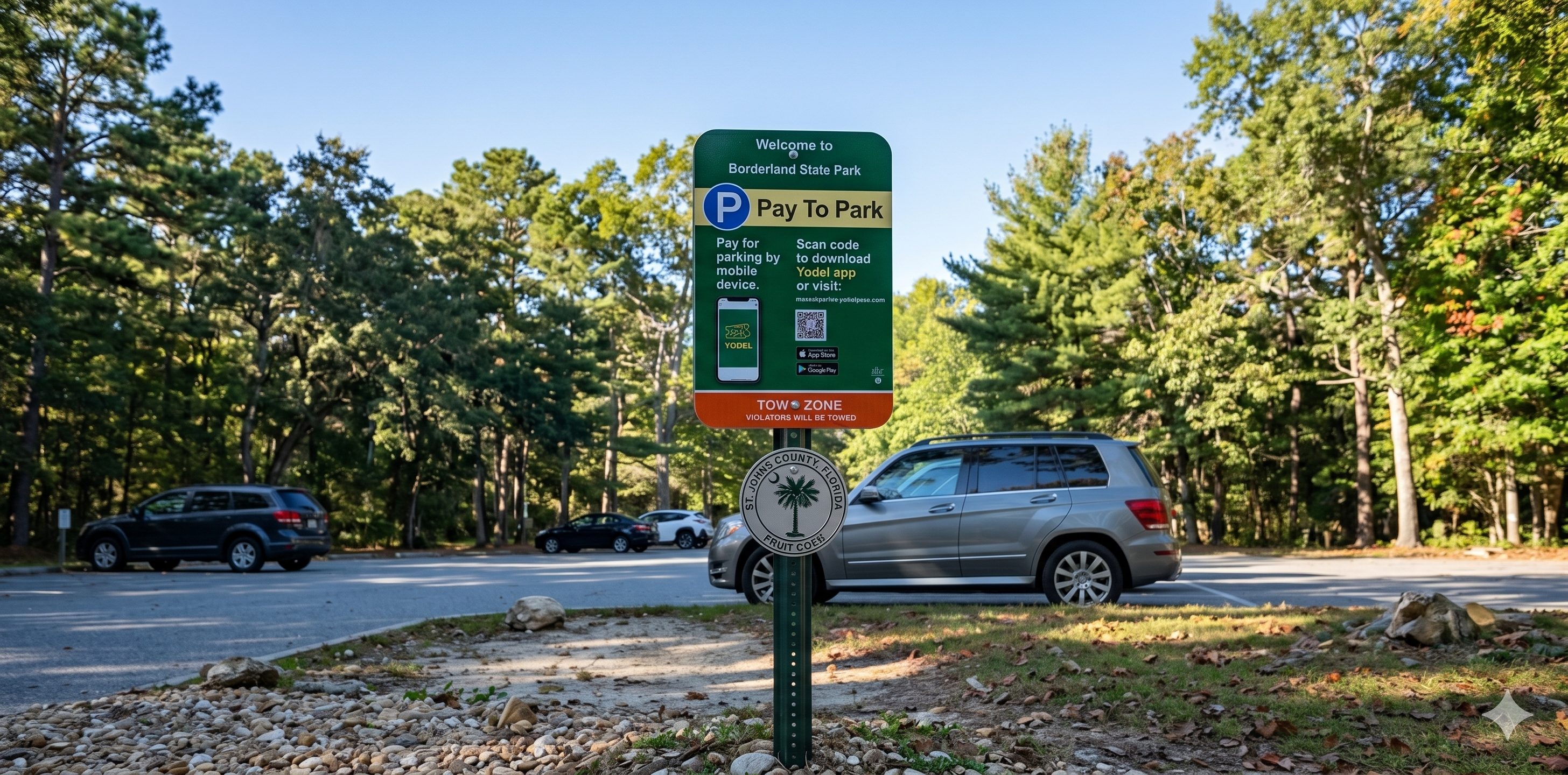
A digital-first system allows visitors to purchase passes quickly from their mobile device, removing the need for cash or physical infrastructure. At the same time, park staff are equipped with mobile tools that enable real-time validation and enforcement in the field.
This approach replaces uncertainty with clarity. Agencies gain a streamlined purchasing experience for visitors, digital passes tied to license plates or QR codes, flexible mobile enforcement tools for staff, and real-time visibility into revenue and park usage.
What Agencies Typically See After the Shift
- Compliance increases significantly as payment becomes fast and accessible
- Revenue grows—often substantially—without raising fees
- Staff time is reallocated from manual collection to higher-value work
- Operational visibility improves with real-time reporting and validation
What Happens When Parks Make the Change
The impact of this transition is both immediate and measurable.
In one case, a park department had reached a point of frustration with its existing system. Iron rangers required ongoing maintenance, compliance remained low, and there was little confidence in the accuracy of revenue collection.
After implementing a digital, unmanned entry model, the agency saw a significant increase in compliance, followed by corresponding growth in revenue. Importantly, this improvement was achieved without adding staff or investing in new physical infrastructure.
The shift was not about doing more—it was about operating more effectively.
In fact, the team was so ready to move on from their previous system that they attempted to donate their iron rangers to a local county museum.
%20(1)-jpg.jpeg?width=648&height=187&name=download%20(5)%20(1)-jpg.jpeg)
A Better Model for Unmanned Parks
Unmanned parks do not need to be a source of lost revenue or operational frustration. With the right approach, they can become one of the most efficient and scalable components of a park system.
By removing reliance on outdated collection methods and introducing a mobile-first experience, agencies can improve compliance, increase revenue, and provide better service to visitors—all without increasing overhead.
This is not simply a technology upgrade. It is a shift in how parks manage entry, enforce compliance, and understand performance.
The agencies making this transition are not only modernizing their operations—they are capturing revenue that was always there, but never fully realized.